

Left-pointing black arrow icon on a white background

All insights

Building Safety Act

Adrian Williamson

Share this article

What is the Building Safety Act?

Everything you need to know

The Building Safety Act 2022 coming into force on the 1st July 2026 is the most significant reform of building regulations in a generation. If you are planning a new build, extension, renovation, or development project in Wales, you need to prepare for important changes to the Building Regulations coming into effect on 1 July 2026.

These updates are part of the Welsh Government’s Building Safety Programme and the Building Safety Act 2022. They introduce new requirements for dutyholders and competence declarations that will affect every project submitted from that date. Here's what's changed and what it means for you.


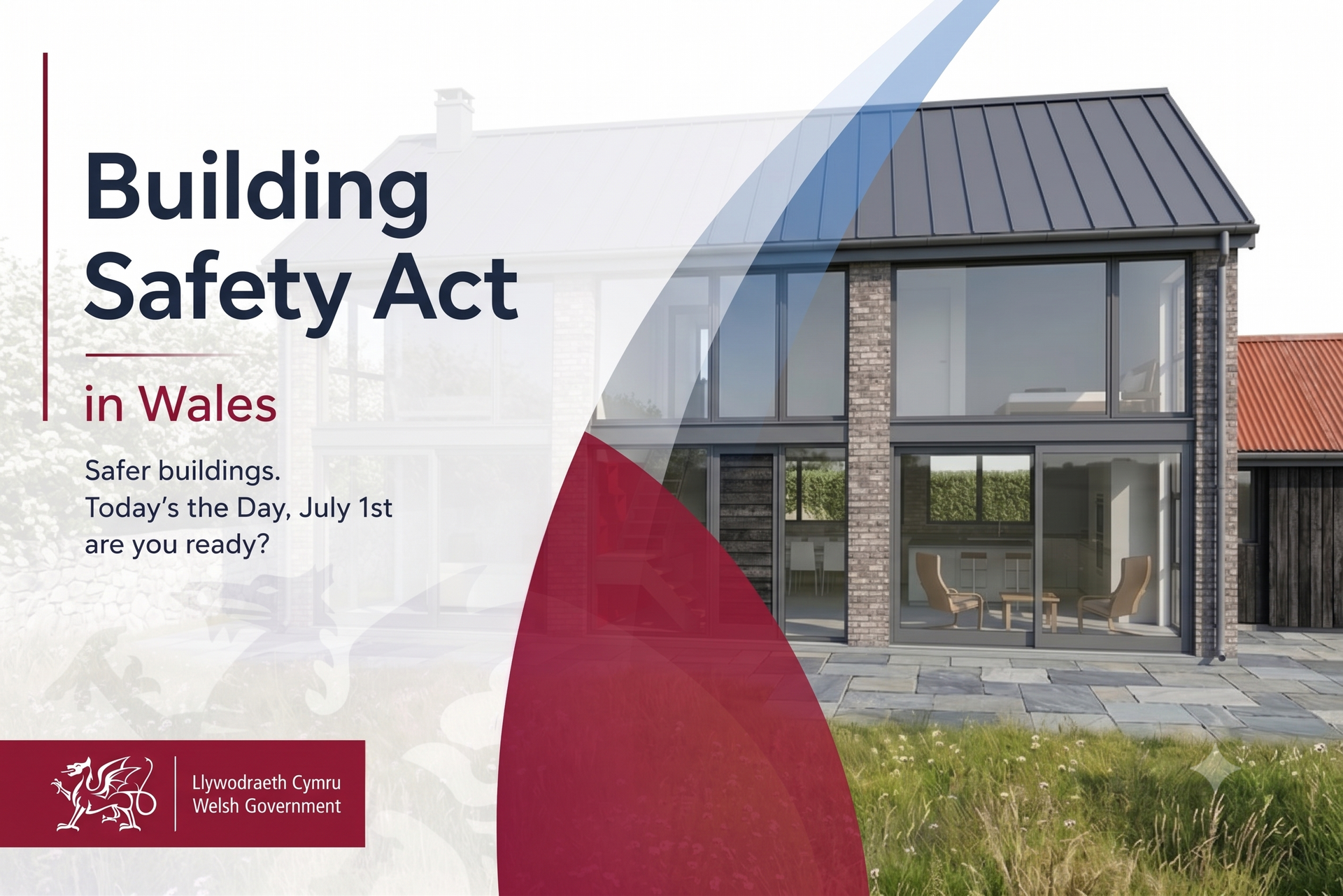
Building Safety Act image

Image by Adrian Williamson - Building Safety Act, commencing 1st July 2026


New duties and roles

The Act introduces clearly defined duty holders - the people legally responsible for safety throughout design and construction:

  • Clients must ensure the right competent people are appointed and that safety is embedded from day one
  • Principal Designers must manage safety risks through the design process
  • Principal Contractors must ensure safe construction and maintain a detailed record (the "golden thread" of information)
  • Accountable Persons take responsibility for safety in occupied HRBs

Ignorance is no longer a defence. Duty holders face serious legal consequences for non-compliance.


New competence declarations for key duty holders

New Competence Declarations for key duty holders One of the most significant changes is the introduction of new competence declarations. These declarations must be completed and signed by the following duty holders before a Final Certificate can be issued:

  • The Client or Homeowner
  • The Principal Designer
  • The Principal Contractor

These declarations confirm that each party has the necessary skills, knowledge, and experience to carry out their roles safely and competently. This step aims to improve accountability and ensure that all projects meet higher safety standards. For example, if you are a homeowner acting as the client for your renovation, you will need to sign a declaration confirming your understanding of your responsibilities. Similarly, the principal designer and contractor must declare their competence in managing design and construction safely.


New Time Limits for Project Commencement

The regulations also introduce strict time limits for starting work on projects. After an Initial Notice is accepted, the project must reach a defined "Commencement Stage" within three years. Simply beginning any work on site will no longer be enough.

The exact requirements for the Commencement Stage depend on the type of project:

  • For complex buildings: foundations and lowest floor structure must be completed
  • For extensions: foundations and substructure must be completed
  • For material alterations: around 15% of permanent works must be completed

If these milestones are not met within the three-year window, the application may lapse. This means you would need to submit a new application, causing delays and additional costs.


What These Changes Mean for Homeowners and Developers

For homeowners and developers, these changes bring new responsibilities and require careful planning:

Homeowners acting as clients must understand their role in managing safety and competence declarations. This may require seeking professional advice to avoid mistakes. Developers and contractors need to ensure projects meet the new commencement milestones on time to avoid lapsing applications. Designers and contractors must demonstrate their competence clearly through signed declarations, increasing transparency and safety on site.

Failing to meet these requirements could lead to project delays, increased costs, and difficulties in obtaining final certification.


On-site building, with large red question mark

Image by Chloe Williams


Prepare for the New Regulations

Preparation is key to navigating these changes smoothly. Here are practical steps to take now:

  1. Engage professionals early: Work with architectural consultants, designers, and contractors familiar with the new regulations.
  2. Understand your role: If you are a homeowner client, learn what the competence declaration involves and how to fulfill your duties.
  3. Plan project timelines carefully: Ensure your project schedule allows reaching the required commencement stage within three years.
  4. Keep clear records: Document all declarations and milestones to provide evidence for final certification.
  5. Seek guidance: Consult experts who can help coordinate compliance and avoid lapsing applications.


What does this mean for clients?

If you're commissioning a building project, especially a higher-risk one, your responsibilities have grown significantly.


Building Safety Act

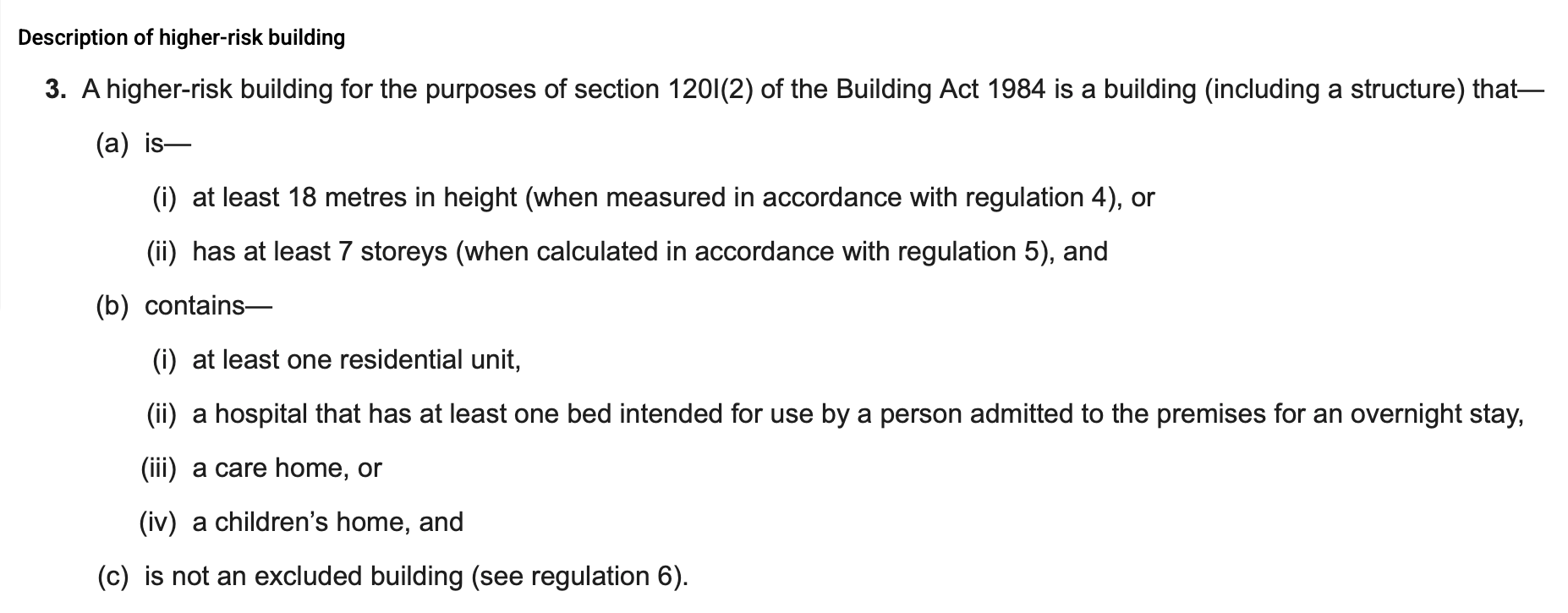
Definition of Higher-risk Buildings in Wales  -  Legislation.gov.uk


The bottom line?

The Building Safety Act shifts the culture from "build it and hope" to proactive, evidenced safety management at every stage. It's more process, more paperwork, and more responsibility but ultimately, safer buildings for everyone.


Useful links

Building Safety (Wales) Act 2026, Implementing the Building Safety (Wales) Act 2026


Recent posts

by Adrian Williamson • 5 October 2026
Biodiversity and Building projects: Making room for nature in your plans Every building project, however small, changes a little piece of the natural world. For a long time the planning system treated that as an afterthought. Not any more. In Wales, every planning application now has to show how it is making a positive contribution to nature, and there are some very simple, inexpensive ways to do that which we build into our projects as a matter of course. This post explains what the rules ask for, and then runs through the practical things you can do on your own project, from a hedgehog gap in a fence to the bat barns and owl towers we have designed on Anglesey. What the planning rules now require The latest edition of Planning Policy Wales (Edition 12) requires every planning application in Wales to be accompanied by a Green Infrastructure Statement. The key paragraph, 6.2.5, reads: “A green infrastructure statement should be submitted with all planning applications. This will be proportionate to the scale and nature of the development proposed and will describe how green infrastructure has been incorporated into the proposal. In the case of minor development this will be a short description and should not be an onerous requirement for applicants. The green infrastructure statement will be an effective way of demonstrating positive multi-functional outcomes which are appropriate to the site in question and must be used for demonstrating how the step-wise approach (Paragraph 6.4.21) has been applied.” The important words there are “proportionate” and “should not be an onerous requirement”. For a house extension or a small conversion, the statement is typically a short paragraph or two describing what you are doing for nature, and we prepare it as part of the application. What the planning authority wants to see is that you have thought about it and built something in, rather than bolted it on at the end. The wider legal backdrop is the Environment (Wales) Act 2016 , which places a duty on public bodies to maintain and enhance biodiversity, and Technical Advice Note 5: Nature Conservation and Planning , which explains how that duty is applied through the planning system.

Image of house
by Adrian Williamson • 16 September 2026
Thinking of buying or altering a listed building? Here's what we tell out clients: There’s something special about living in a listed building. You’re not just an owner, you’re a custodian, looking after a piece of history for the people who come after you. That’s a lovely thing, but it also brings a level of responsibility that a modern house simply doesn’t. Alterations are perfectly possible, but they need to be thought through carefully, and there are a few traps for the unwary along the way. We work with listed and historic buildings across Anglesey, Gwynedd and Eryri, and we find ourselves giving the same advice again and again. So here it is, in one place.

Thinking about your next project?