All insights
Biodiversity Elements
Biodiversity and Building projects:
Making room for nature in your plans
Every building project, however small, changes a little piece of the natural world. For a long time the planning system treated that as an afterthought. Not any more. In Wales, every planning application now has to show how it is making a positive contribution to nature, and there are some very simple, inexpensive ways to do that which we build into our projects as a matter of course.
This post explains what the rules ask for, and then runs through the practical things you can do on your own project, from a hedgehog gap in a fence to the bat barns and owl towers we have designed on Anglesey.
What the planning rules now require
The latest edition of Planning Policy Wales (Edition 12) requires every planning application in Wales to be accompanied by a Green Infrastructure Statement. The key paragraph, 6.2.5, reads:
“A green infrastructure statement should be submitted with all planning applications. This will be proportionate to the scale and nature of the development proposed and will describe how green infrastructure has been incorporated into the proposal. In the case of minor development this will be a short description and should not be an onerous requirement for applicants. The green infrastructure statement will be an effective way of demonstrating positive multi-functional outcomes which are appropriate to the site in question and must be used for demonstrating how the step-wise approach (Paragraph 6.4.21) has been applied.”
The important words there are “proportionate” and “should not be an onerous requirement”. For a house extension or a small conversion, the statement is typically a short paragraph or two describing what you are doing for nature, and we prepare it as part of the application. What the planning authority wants to see is that you have thought about it and built something in, rather than bolted it on at the end.
The wider legal backdrop is the Environment (Wales) Act 2016, which places a duty on public bodies to maintain and enhance biodiversity, and Technical Advice Note 5: Nature Conservation and Planning, which explains how that duty is applied through the planning system.

An illustrative example of biodiversity enhancements around an ordinary house: swift and bat boxes, house martin cups, a bird box, hedgehog gap and box, bee bricks, pollinator planting, a pond and a green trellis wall.
So what can you do to give nature a net benefit?
The most valuable thing is habitat. Creating or improving semi-natural habitat, such as native hedgerows, wildflower areas, ponds and trees, improves connectivity for bats, birds, hedgehogs, amphibians, reptiles and insects, and can deliver a real net benefit for biodiversity on your site.
Where the building itself offers no sensible place to integrate a nest or roost, boxes fixed to trees or walls are the next best thing. We generally specify woodcrete boxes rather than timber ones: they are made from a long-lasting, durable material and are far more likely to survive for the lifetime of the building. Wherever you put them, position matters. Each species has its own preferences for height, aspect and shelter, and a box in the wrong place will simply stay empty.
Bats
Bat boxes give bats somewhere to roost where access to tree roosts and suitable buildings is limited. The Bat Conservation Trust has clear advice on choosing and putting up a bat box.
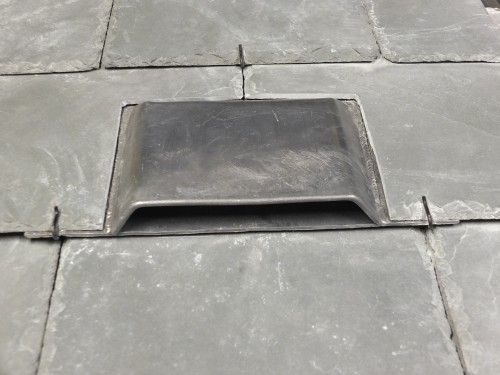
If you are working on a building that already has bats, one of the simplest ways to protect the roost for the long term is to build in a bat access point, for example a purpose-made access slate or a small gap under the ridge or eaves. Bats are strictly protected by law, so this is often a formal requirement of the works, and you should always get personalised advice from an ecologist before going ahead. The Bat Conservation Trust explains the options for creating access for bats.


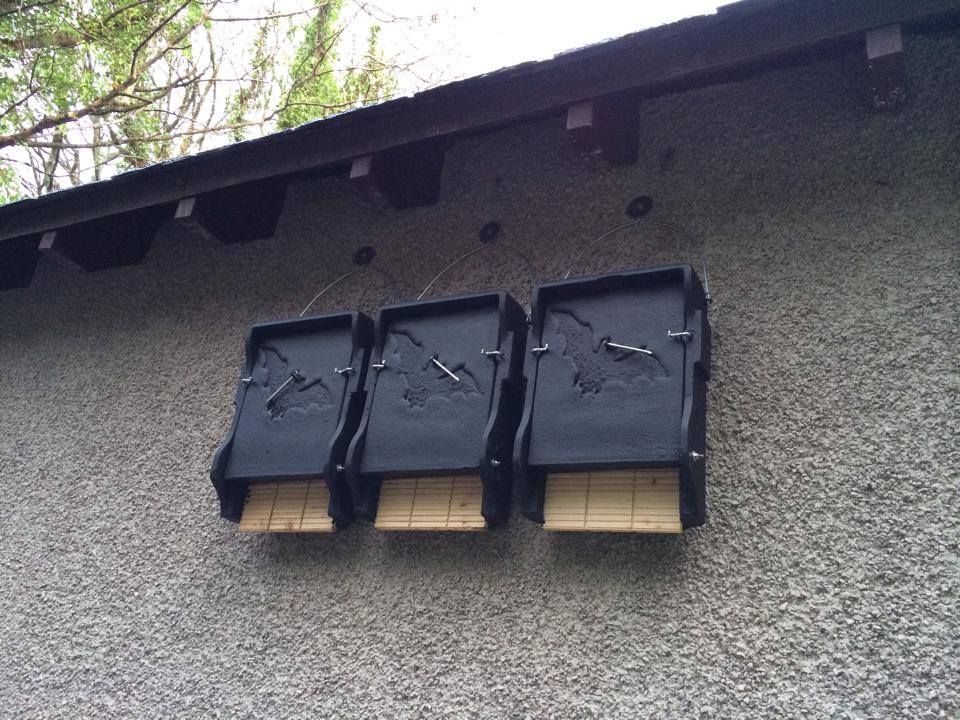
Woodcrete bat boxes fixed high on a gable wall, sheltered by the eaves (left).
A purpose-made bat access slate lets bats in and out of a roof without letting the weather in (right).
Hedgehogs
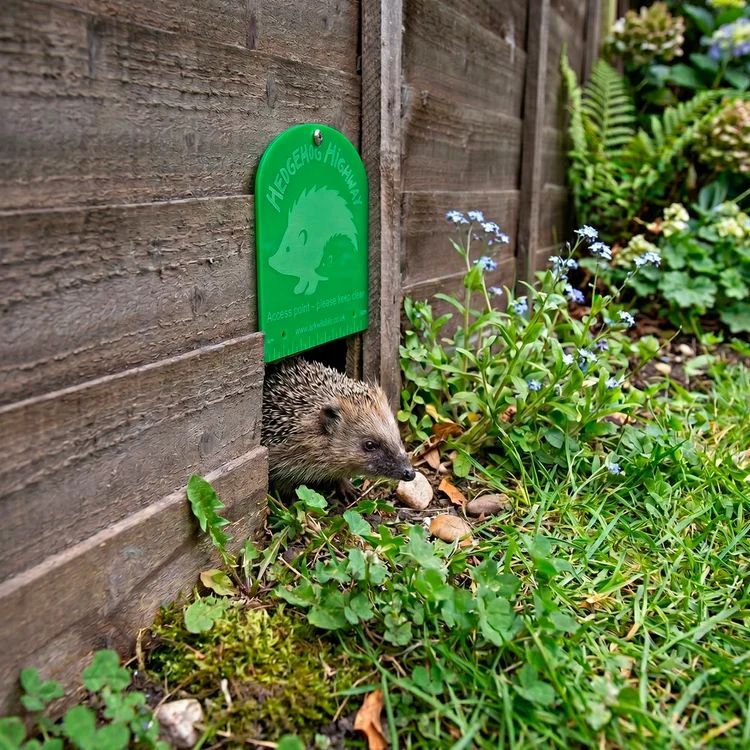
Hedgehogs can travel around a mile every night in search of food and shelter, and a fenced-in garden is a dead end for them. A hedgehog highway is simply a series of small holes, about 13cm square, in fences and walls that lets hedgehogs pass freely between gardens, parks and allotments without having to cross roads. It costs almost nothing, and it is one of the easiest things to add to any project with a boundary.

A hedgehog gap in a garden fence, marked with a plaque so the next owner knows what it is for.
Garden birds
Bird boxes are an easy and effective way of providing a home for a range of species. Boxes for tits, sparrows and starlings should be fixed two to four metres up a tree or wall. Unless there are trees or buildings that shade the box during the day, face it somewhere between north and east so it avoids strong sunlight and the wettest winds, make sure the birds have a clear flight path to the entrance, and tilt the box forward slightly so driving rain hits the roof and bounces clear. The RSPB has a good guide to nest boxes.
Swifts, swallows and house martins
Swift nest bricks and boxes, and swallow and house martin nest cups, can be fitted under the eaves of a building to give these summer visitors somewhere to breed. A swift brick can be built directly into the wall of a new house or extension and needs to be at least five metres above the ground with a clear drop below it. Swift numbers have fallen sharply, and a brick built into the wall of a new home is one of the most useful things a building can do for them. See Swift Conservation for more.


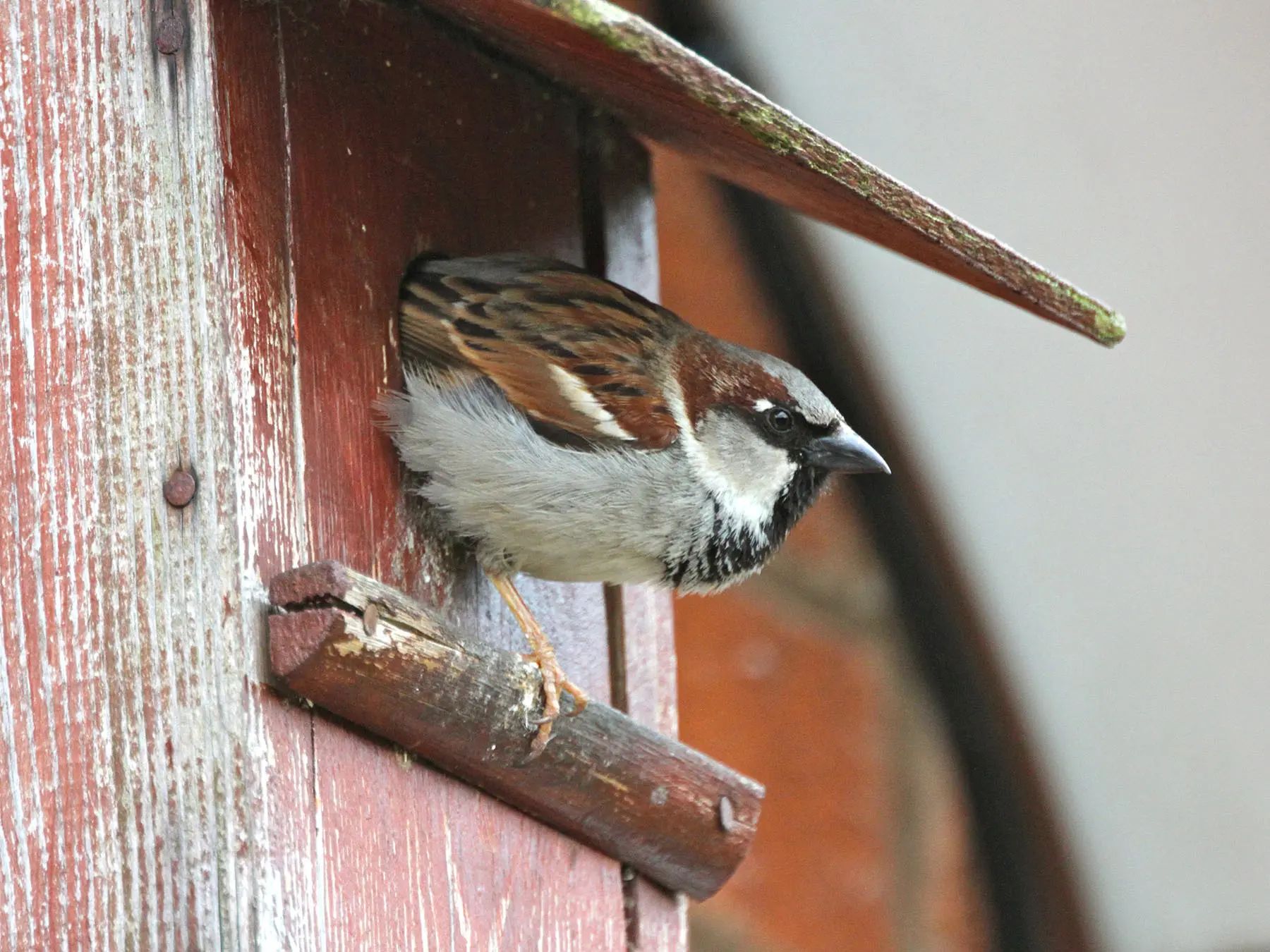
A house sparrow at the entrance to a nest box (left).
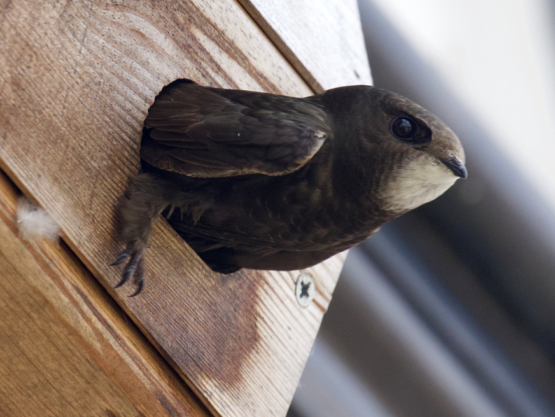
A swift leaving a purpose-made nest box (right).
Bat barns, owl towers and other structures for protected species
Over the last few years we have designed a number of dedicated structures for protected species. Some have grown out of barn and outbuilding conversions, where an existing roost or nest site has to be replaced; others are bespoke buildings on a new site where an ecologist has identified the need. Working alongside local ecologists including Cambrian Ecology, EcoScope, Greenman Ecology and Enfys Ecology, we have developed a series of “bat barns” and “owl towers” which have gone on to house not just bats and owls but swifts, sparrows, kestrels, bees and more. The photographs here are from several sites on Anglesey. Much of the habitat detailing was worked out with the ecologists, drawing on guidance from the Barn Owl Trust and the Bat Conservation Trust.

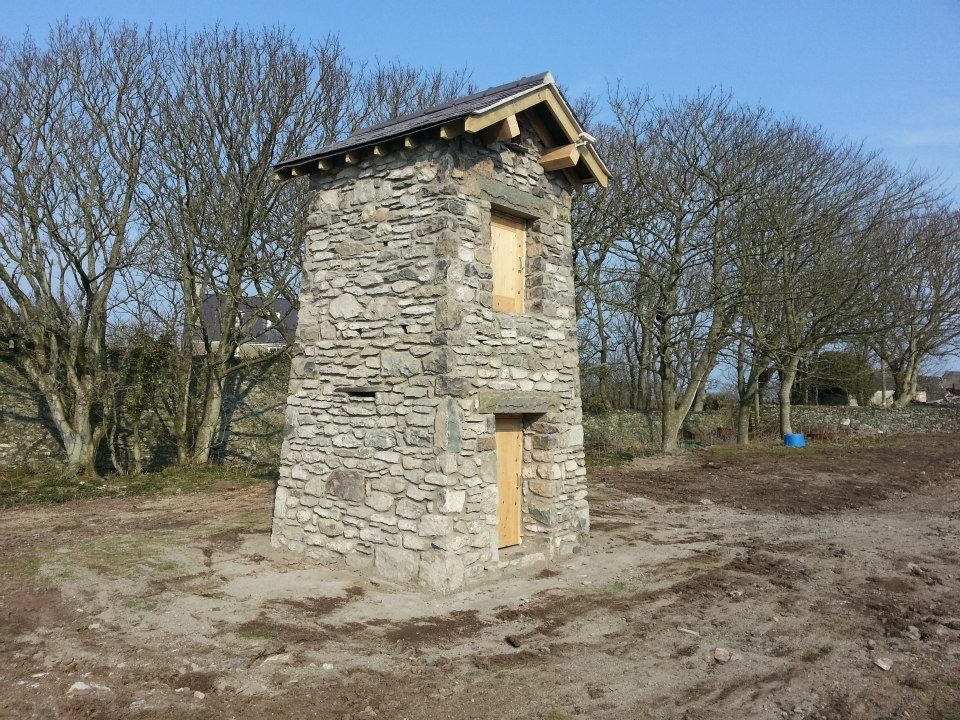
A stone owl tower under construction on Anglesey (left).
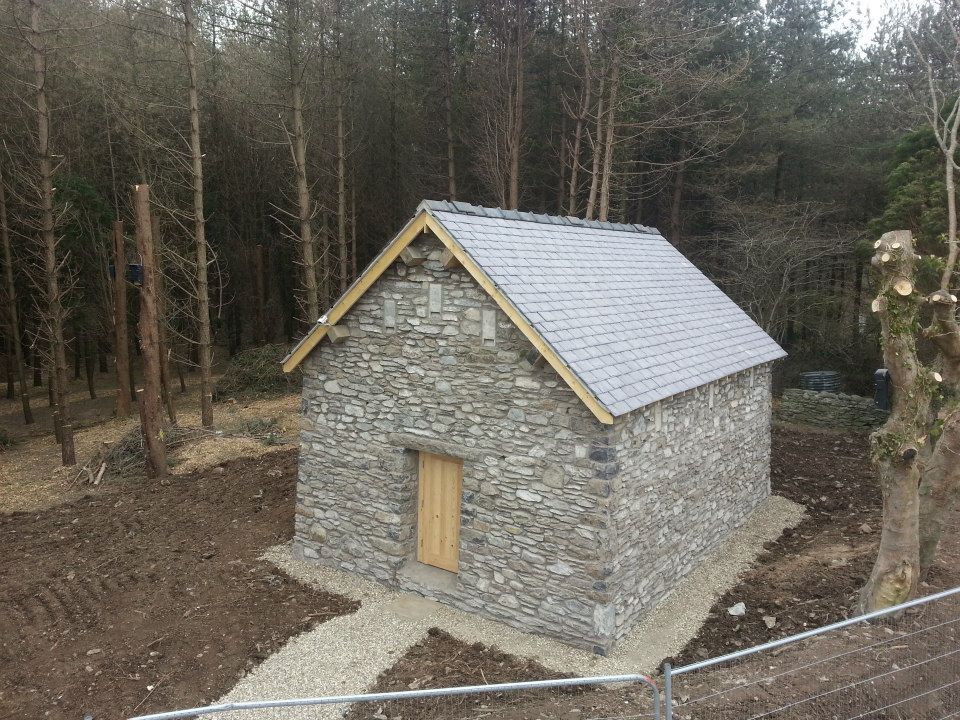
A new bat barn built in local stone with a slate roof (right).

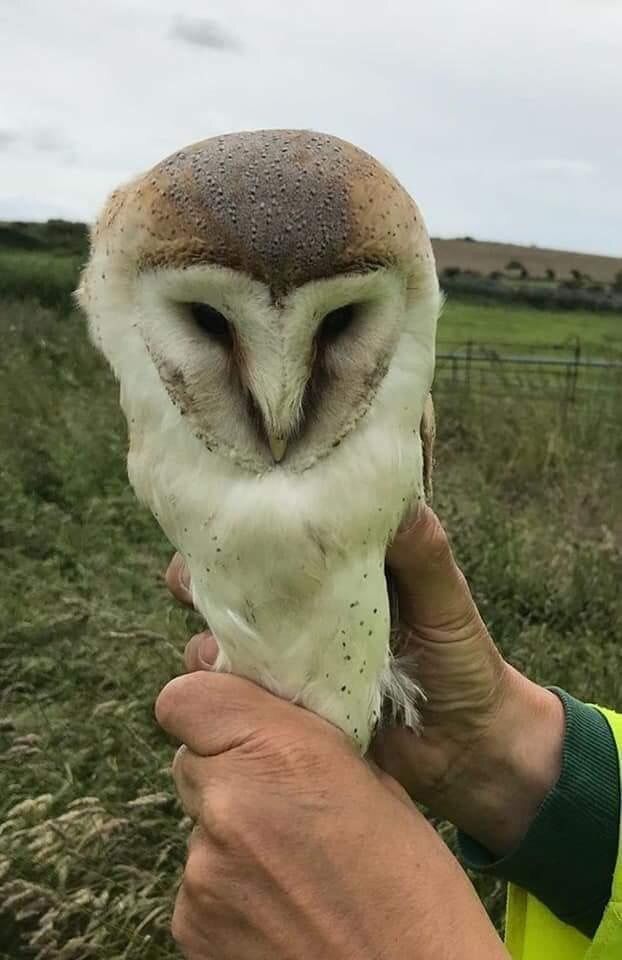
A barn owl being checked by an ecologist (left).
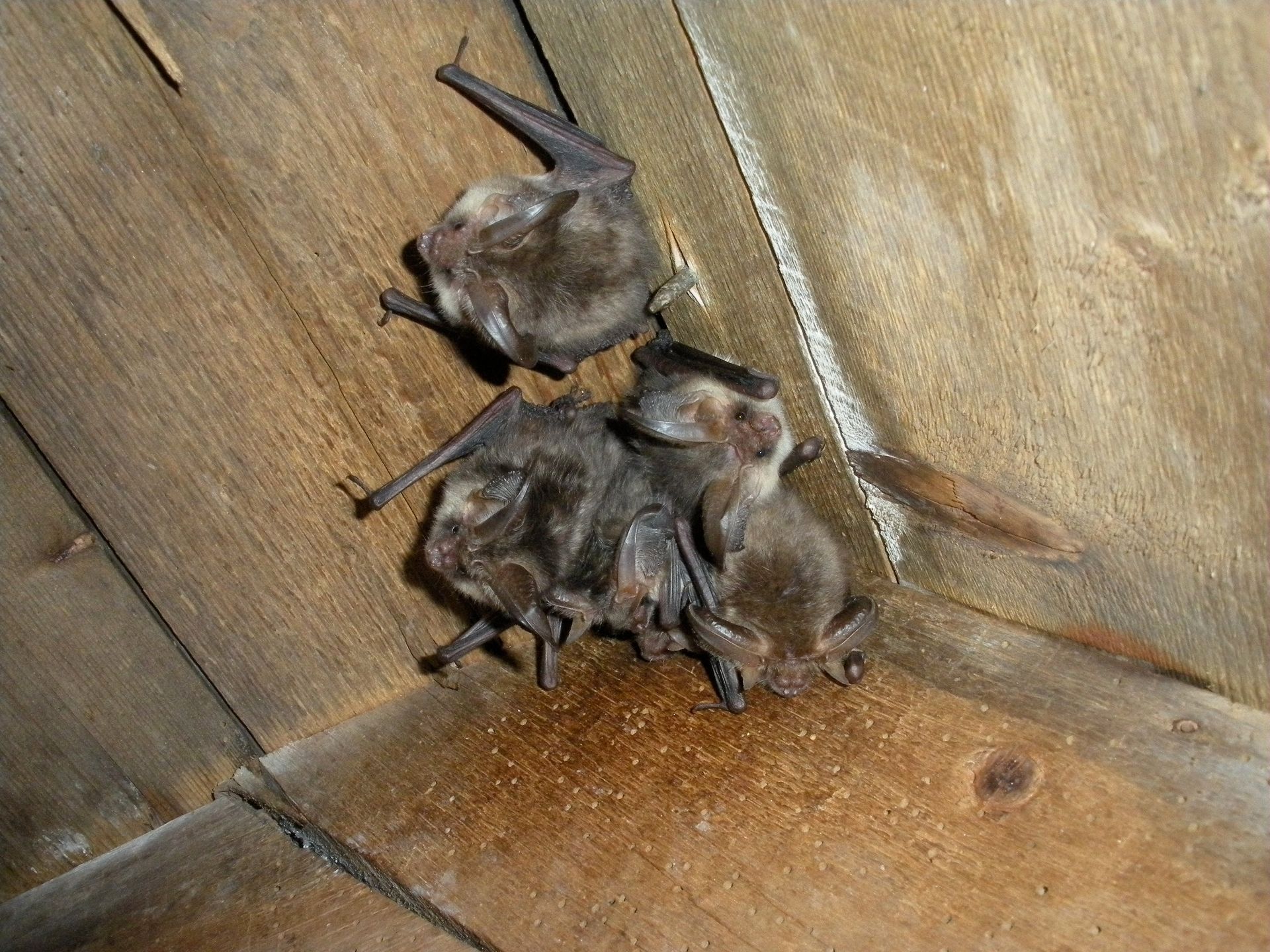
Bats roosting in one of the completed structures (right).
A word of advice before you start
If your refurbishment or conversion involves major changes to a roof or loft space, particularly in an older building, a barn or a structure that has stood empty for a while, talk to a consultant ecologist early. Bats, barn owls and nesting birds are all legally protected, and finding them halfway through a job can bring work to a standstill. A survey at the outset, ideally in the spring or summer survey season, lets us design the mitigation in from the start and keeps the project on programme.
How we can help
We build biodiversity into every project we design, from the Green Infrastructure Statement that goes in with the planning application to the swift brick in the gable wall. If you are planning an extension, a conversion or a new build anywhere in Anglesey, Gwynedd or Eryri, we are happy to talk through what would work on your site.
Useful links
Planning Policy Wales, Edition 12 sets out the Green Infrastructure Statement requirement, and the Environment (Wales) Act 2016 and TAN 5: Nature Conservation and Planning provide the legal and policy background. The Bat Conservation Trust has guidance on bat boxes and creating access for bats, the RSPB covers nest boxes, Swift Conservation covers swift bricks and boxes, and the Barn Owl Trust has detailed advice on owl provision in buildings.
Recent posts